A first trip to China can include palaces and ancient cities, classical gardens, river landscapes or cave art along the Silk Road. Rather than trying to fit everything into one visit, choose two or three experiences you most want and build a route around them. Give each stop a different purpose.
Beijing and Xi’an for history
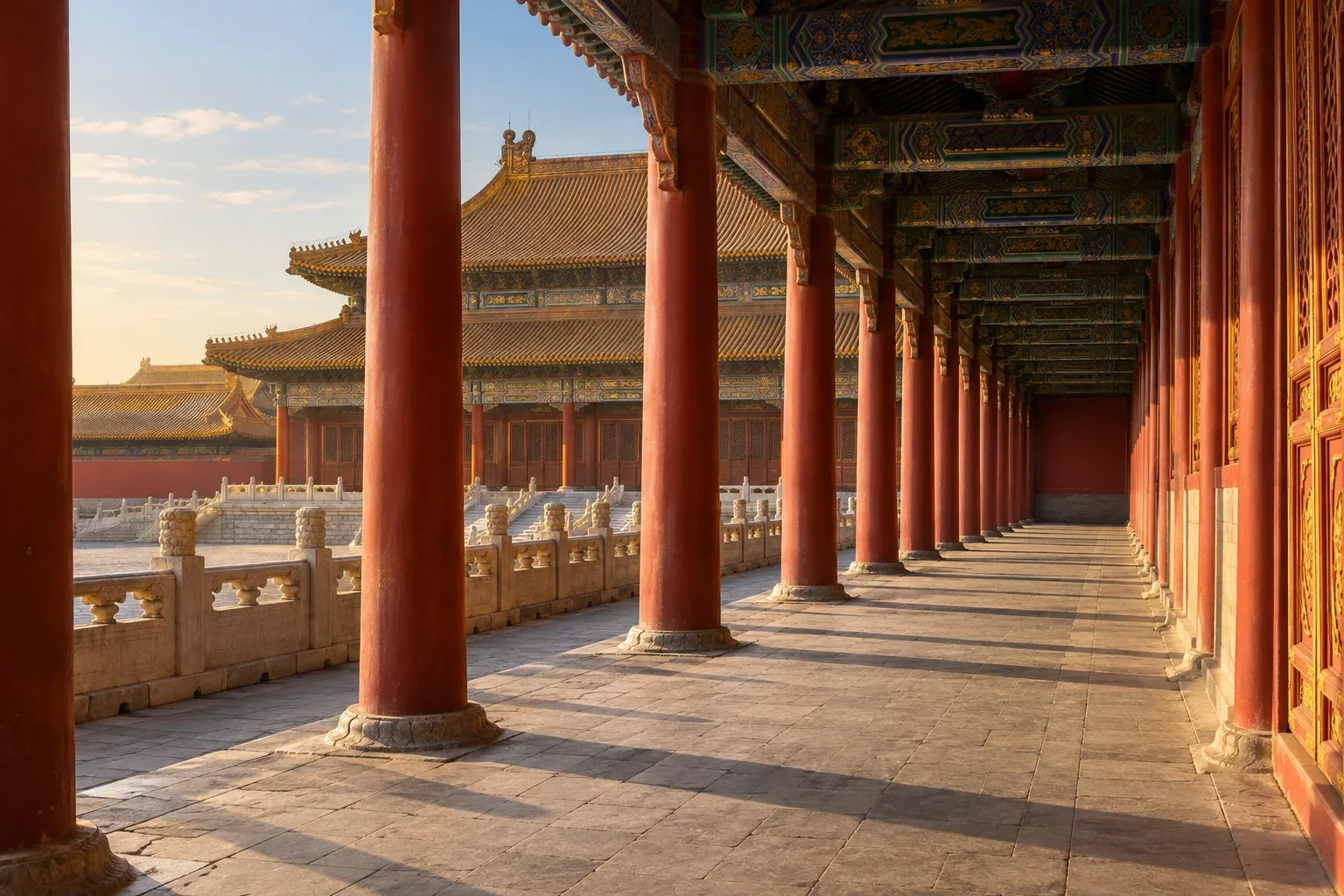
Beijing’s Forbidden City, Temple of Heaven and Great Wall offer different perspectives on imperial life, ceremonial architecture and defensive engineering. Leave a substantial part of the day for a Great Wall excursion, choosing the section to suit your mobility and transport arrangements. Balance major monuments with a hutong or park walk instead of filling every day with large attractions.
In Xi’an, the Terracotta Army is a natural focus for a trip interested in ancient China. Look beyond the scale of the pits to the differences between figures, horses and formations. A guide can help explain their relationship to the first Qin emperor’s burial complex. Back in the city, the walls, neighbourhoods and museums add other layers to the visit. See UNESCO’s introduction to the Mausoleum of the First Qin Emperor for historical context.
Guilin or Zhangjiajie for landscapes
Guilin and Yangshuo lend themselves to rivers and the countryside. A Li River cruise, a rural walk or a bike ride around Yangshuo can provide a slower way to see the scenery. Longji Rice Terraces need their own allowance for travel and sightseeing. Mountain roads, steps and the location of your accommodation all affect how demanding a visit feels.
Zhangjiajie is known for sandstone pillars, valleys and forest landscapes. Mountain viewpoints and valley walks offer different perspectives, so it suits travellers willing to give natural areas full sightseeing days. Cable cars, lifts and park transport reduce some climbing, but transfers, walking and queues still take time. UNESCO’s Wulingyuan introduction explains the landscape’s setting.
If you are choosing just one region, start with the pace you enjoy. Guilin may be the closer fit for rivers and countryside time; compare Zhangjiajie if mountain viewpoints are a central priority.
Chengdu for pandas and everyday city life
Allow around half a day for a panda-base visit, then pair it with a teahouse, a park or a city walk. This is often more comfortable than adding several distant attractions on the same day.
Animal viewing depends on weather, conservation work and the base’s arrangements. Keep voices low, do not feed animals or use flash, and do not expect close-contact experiences as part of a normal visit. Check the panda base’s visitor guidance before going.
Suzhou and Hangzhou for gardens and water towns
Suzhou’s gardens bring water, rocks, planting and buildings into carefully composed spaces. Take time to notice views through windows, corridors and changing angles. Looking closely at one or two gardens, with time for nearby lanes, can be more rewarding than rushing through several. UNESCO’s guide to Suzhou’s classical gardens provides a useful introduction.
In Hangzhou, West Lake and tea-growing areas can anchor your stay. Together with Shanghai and Suzhou, they form a relatively concentrated route through the lower Yangtze region, often called Jiangnan.
The Yangtze for scenery along the way
A Three Gorges cruise combines accommodation, river travel and shore visits. It can suit travellers who want fewer hotel changes and less handling of luggage. Compare sailing direction, duration, cabin type and shore programmes, and check which activities are included in the price.
Boarding arrangements, steps and walking at shore attractions still matter when judging the physical demands of a cruise.
Dunhuang and the Hexi Corridor for cave art and desert scenery
If you are interested in cave art, historic exchanges and northwestern landscapes, look further into Dunhuang and the Hexi Corridor. Distances between stops can be substantial. Leave room for cave reservations and intercity journeys, and consider sun and windblown sand when arranging desert outings. Avoid compressing several distant sites into one day.
Connect experiences with a clear route
For history alongside modern city life, see 9-Day Shanghai–Beijing: Ancient Capitals. To compare two landscape regions in one trip, look at 9-Day Shanghai–Guilin: Peaks & Rivers. For pandas and river travel, explore 11-Day Shanghai–Chengdu: Yangtze & Pandas.